Affichage des articles dont le libellé est moon. Afficher tous les articles

lundi 11 octobre 2010

:: Phobos


Phobos is one of the two satellites (moons) of Mars, Deimos his neighbor is a bit smaller.
As you probably know the asteroid belt is between Mars and Jupiter and we think that Phobos was an asteroid from this belt captured by the gravity of Mars and has become one of its moons.
It has a very small size and is not a sphere which is another reason for us to assume that it was an asteroid.
Diameter:10km
Discovered by: Asaph Hall
Discovery date: August 18, 1877

lundi 23 novembre 2009

:: Io la lune de Jupiter

Français


Io est la troisième plus grande lune de Jupiter ;
Elle est aussi grande que notre lune.
Il a beaucoup de différentes couleurs
parce que c'est le corps céleste qui a le plus de volcans.
Les montagnes de Io sont beaucoup plus grandes
que les montagnes terrestres.
Elle a été découverte en 1610 par Galilée et Marius.

English
Io is as big as our moon.
Io is the third largest moon from Jupiter and the.
It is really coulourful because it is the most volcanic body known.
Io's mountains are much bigger than ours.
It was dis covered in 1610 by Galilei and Marius.

lundi 28 septembre 2009

:: de l'eau sur la lune !

Je viens d'apprendre qu'on a trouvé de l'eau sur la lune !... Enfin, de l'eau : "Il n'y a pas la moindre flaque, rosée ou même goutte d'eau sur la Lune".
Mais les trois sondes spatiales de la NASA ont repéré des... molécules d'eau... En effet, "pas de quoi désaltérer les astronautes comme le rêvent déjà les partisans d'une colonisation de notre satellite naturel", écrit Le Monde.
Si vous voulez en savoir plus, cliquez ici ou là.

jeudi 9 juillet 2009

:: calisto

Calisto is a moon of Jupiter. It is one of the oldest object of the solar system. It is the 3rd largest moon in the solar system. Calisto is composed of rock and ice.


This picture shows the cratered surface of Callisto.

mercredi 1 juillet 2009

:: Encelade, l'objet le plus lumineux du système solaire

Encalade est une lune de Saturne, recouverte entièrement de glace propre, et est l'objet le plus lumineux du système solaire !!!

Elle a été découverte en 1789 par Herschel.

Voilà deux images prises par la sonde Voyager :

jeudi 25 juin 2009

:: Une nouvelle mision pour la lune / A new mission to the Moon

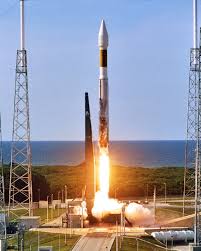
Atlas 5 est une fusée partie pour la lune. C'est la première mission pour la lune depuis 10 ans. Il s'agit de trouver de la glace d'eau et de rapporter de belles images. Elle transporte deux sondes.

Atlas 5 is a rocket to the moon. It is the first mission in 10 years to go to the Moon. It is looking for water ice and going to take pictures of the Moon. It is carrying two space probes.

mardi 9 juin 2009

:: Moon, comets and shooting stars...

Moon:
Long before the dinosaurs, there was no moon! One day a comet crashed into the Earth, It set the whole earth on fire!!! Rocks went into orbit around the Earth. In a very short time all the rocks came together and it formed the moon.

Comets and shooting stars:
At first, comets are ice and rocks. Then comets pass next to a star. The star is so hot that the ice of the comets melts and the rocks start burning. Then the comet goes into the Universe. Sometimes it comes near the Earth so we can see them and then we call them shooting stars.

vendredi 22 mai 2009

:: Mars 2 moons: deimos and Phobos

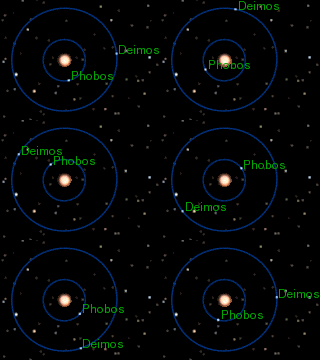
Mars has two moons : Phobos and Deimos.

Phobos:
Diameter: 10 kms
Distance to Mars: 9000 kms
It is composed of different kinds of rocks.
It looks like an asteroid.


Deimos:
Dimensions (it is not round): 10 x 12 x 15 kms.

mercredi 20 mai 2009

:: Uranus moons

Uranus has 21 named moons and 6 unnamed ones.


Small moons:
Juliet
Portia
Rosalind
Belinda
Puck
Cordelia
Bianca
Cressida
Desdemona


5 main moons of saturn:

Oberon


Titania


Umbriel


Ariel


Miranda


They are composed of ice and rock. There are more moons.

samedi 16 mai 2009

:: Jupiters : 63 moons !

Jupiter with its 63 moons.
Names coming from Zeus's servants etc...
Let me present the four mane ones, discovered by Galileo in 1610...

Europa
The latest discoveries show that there may be life on Europa, the ice field that covers Europa seem to hide a ocean, very exiting indeed but the possibilities of life are small.

Europa is smaller than The Moon but much brighter, in fact it's one of the brightest moons in the solar system. This is caused because of sunlight reflecting off a relatively young icy crust.

Europa is named after the gorgeous Phoenician princess, who (according to the Greek mythology) was gathering flowers when Zeus spotted her and instinctively fell in love with.
  • Distance from Jupiter :670 900 kms.
  • Diameter: 3 138 km.
  • fourth biggest satellite from Jupiter
  • Discovered by: Galileo

Io
A bit bigger than the moon, Io orbits around Jupiter from about the same distance as the moon is to the earth.

Active volcanoes are present everywhere on Io.

  • Distance from Jupiter: 421 600 km
  • Time to orbit Jupiter: 1. 77 days
  • Diameter: 3 643km
  • Discovered by: Galileo

Ganymede
Ganymede is the largest moon of Jupiter, as Callisto it is mostly composed of a rocky core with a water/ice mantle and a crust of rock and ice. It was formed with 60% of rock and 40% of ice.

  • Distance of Jupiter: 1. O7 million km.
  • Time top orbit Jupiter: 7.15 days
  • Diameter: 5262 km
Callisto
As Europa, this satellite is brighter than the moon. Callisto is a bit smaller than Mercury but contains on third of its mass.

Callisto is surely the most heavily cratered object in our known solar system. Its largest crater is named Valhalla. Valhalla's diameter is 2 485 km.

  • Distance from Jupiter: 1.88 million km
  • Time to orbit Jupiter: 16.69 days
  • Diameter: 4821km

lundi 11 mai 2009

:: Saturn moons

Main moons of Saturn:

Prometheus
Prometheus, the third known moon of Saturn, is small and potato-shaped and it orbits Saturn in the ring F. It has a few craters of about 20 km that are in diameter visible.
In the Greek mythology, Prometheus was a titan, it is known for stealing fire from Zeus and giving it to humans.
  • Distance from Saturn: 139 353 km
  • Diameter: 91 km
  • Time to orbit Saturn: 0.61 days
Enceladus
Tenth moon from Saturn, Encelade orbits the Planet in the Ring E. This moon is the brightest object in the known solar system. It was discovered by William Hershel in 1789. This moon displays at least 5 different types of terrain.
  • Diameter: 500 km
  • Distance from Saturn: 238 020 km
  • Time to orbit Saturn: 1.37 Earth days

Dione
Nice and round, Dione was discovered by Cassiny the same day as Tethys. It is an icy body and is one of the densest moons of Saturn. Its surface is heavily cratered. Some of its craters are more than 100 km.
  • Distance from Saturn: 377 400 km
  • Diameter: 1120 km
  • Time to orbit Saturn: 2.74 Earth days

Titan, the size of Mercury, is the largest of Saturn's moons. Before the Voyager encounters, scientists thought a lot of things that are now known to be wrong.
Titan's surface temperature appears to be about -178°C.
  • Distance of Saturn: 1.22 million km
  • Time to orbit Saturn: 15.9 earth days
  • Diameter: 5 150 km
There are much more important moons of Saturn but please don't expect me to write about them because there are... 61!! Only 34 are named though.

The diameters of Saturn's moons range from 2 to 5150 kms.

Reblog this post [with Zemanta]