Affichage des articles dont le libellé est Planets. Afficher tous les articles

jeudi 18 juin 2009

:: Photos of the solar system / Photos du système solaire


Voici plusieurs photos du système solaire et de toutes les planètes du système solaire, avec Pluton (qui est une planète naine).


Here are some photos of the solar system and its planets, plus Pluto (which is a dwarf planet).

mercredi 10 juin 2009

:: Exoplanets

Exoplanets are planets that are not in the solar system.
We have found lots of exoplanets : for example, one is 2 times as big as the Earth.

samedi 6 juin 2009

:: Mercury

Mercury is the smallest planet if you do not count dwarf planets, and the closest to the sun.
It is a bit larger than our moon but a bit smaller than the earth. We started to oserve Mercury in 1960.
Mercury has no moons.
For the Romans, Mercury was Messager of the Gods.
  • Diameter: 4 900 kms.
  • Distance to the sun: 58 million kms.
  • Duration of rotation: 59 days.
  • Duration of revolution: 88 days.

jeudi 28 mai 2009

:: Neptune

Neptune is the 8 th planet from the Sun and the 4 th largest planet.
Neptune has a storm that is called the great dark spot. Like Uranus it is blue because of its gazes.
Scientists think that there is a very large ocean under Neptune's clouds.
Neptune a is bit smaller than Uranus but is heavier.
Neptune has only been visited by Voyager 2.
  • Distance to the sun: 4,498,252,900 kms.
  • Diameter: 49,528 kms.
  • Duration of rotation: 16.11 days.
  • Duration of revolution: 60 181 .3 days.

jeudi 21 mai 2009

:: Mars

It is located just after the Earth and it is the seventh largest planet.
It is red because its desertic surface made of rocks, has a reddish colour, due to the clouds of iron dioxide raised by strong winds.
For the Romans, Mars was the God of war.
Mars is visible at night without a telescope.
The first satellite to visit Mars was Mariner 4; it was followed by others.

The largest volcano in the solar system is situated on Mars, it is called Olympus Mons. The Diameter of Olympus is 648 km and its height is 22.5 kilometers.

Scientists are still trying to discover if there was life on Mars a long time ago, a proof that there could be is that astronomers are sure that there has been water on mars. NASA's Phoenix mars lander discovered water ice on mars the fourth august 2007.

  • Distance to the sun: 228 million kms.
  • Diameter: 6794 kms.
  • Duration of revolution: 687 days.
  • Duration of rotation: 1 days and 37 minutes.
  • Temperature: -133 °c to 27°c!!!

lundi 18 mai 2009

:: Uranus

Uranus is the third Gaz Gigantic Planet And seventh from the sun.
Uranus is containd of: rock, different kind of ice, 15° helium, 83° hydrogene and 2° methane. It gaz gives its blue light.

  • Diameter: 51 100 kms.
  • Distance to the sun: 2,9 milliards of kms.
  • Duration of rotation: 17 hours.Uranus looks like it is on its side and it turns in that orbit.
  • Duration of revolution: 84 hours.


dimanche 17 mai 2009

:: Jupiter

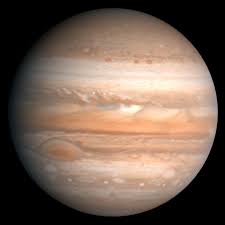
Jupiter is the fifth planet and the largest one in the solar system.

There is a ring system, but it is very faint and is totally invisible from the Earth.


Jupiter is the third shiniest after the sun!

Jupiter has been visited for the first time by the satellite Pioneer 10.

Jupiter has a great red spot (which is a storm), that has been observed 300 years ago.

The spot is big as 3 times the Earth!

The comet Shoemaker-levy 9 crashed into Jupiter. What we could see was incredible!


Jupiter is composed of gases caled hydrogen and helium, and other gases over a tiny rocky core.

Most other planets in other solar systems are a bit heavier than Jupiter but Jupiter is larger than them.

  • Duration of rotation : 10 hours!
  • Duration of revolution : 12 years!
  • Diameter : 142,981 kms. 11 times the Earth!
  • Distance from the sun: 779 million kms.


samedi 16 mai 2009

:: Venus

Venus is the second planet from the sun, and the seventh largest. It is Earth's neighbour and has been observed by satellites.We sometime call Venus the Evening star because at night (a long time ago) people thought it was a star and it was the first to shine. Now we know Venus is not a star but a planet.

Quick facts

  • Moons: none
  • Distance from the sun: 108 200 000 kms.
  • Diameter: 12104 kms.
  • Duration of revolution: 224,7 days.
  • Duration of rotation: 243 days.

Venus's rotation is so slow that a Venus year is smaller than a Venus day.

At some point, astronomers thought Venus was divided in 2.

Surface

About 85% of Venus's surface is covered by volcanic plains covered by layers of lava. There are a lot of craters on Venus but still very few compared to Mercury and the Moon.

Spacecrafts

The first spacecraft to observe Venus was Mariner 2. Since then other spacecrafts have orbited Venus. A few landed on the planet's surface, were able to send a few pictures back to Earth and melted.

Orbit

Venus's orbit is the one that is the less elliptical. It is the only planet to turn in a different direction.

Atmosphere

Venus's atmosphere is composed of: 90.5 % carbon dioxide, 3.5% nitrogen and other gases.

Venus's clouds contain a little water vapor, but we have little reason to think that water in any form exists on the planet itself. We think that most of the water that initially existed on Venus evaporated, when the Sun started to get warmer, and moved up to the upper atmosphere. This created a greengas effect, making the planet even warmer.


mardi 21 avril 2009

:: Saturn

The sixth Planet from the sun, the second largest, Saturn's amazing view impresses all astronomers. In fact it is one of the most beautiful sights in the Solar System. Saturn, also one of the gas planets, can only sometimes in the year be seen like a star, if you wish to see the planet's rings, use a telescope. As you will see in the following text, this giant has been visited by spacecrafts...

This enourmous planet is composed of gaz, except (of course) for the core. To be precise, I will tell you the gazes: 96% hydrogen and 4% helium.


The mass of Saturn is approximately 95 times that of the earth but Earth would fit easily 746 times in Saturn.

Saturn is of such low density that it would float in a (gigantic) bathtub.

Saturn has a great white spot (that is a storm). It was discovered in 1990 and named after Jupiter's great red spot; it is about 1000 meters wide.

NASA’s Pioneer 11 was the first satellite to go to Saturn. It was in 1979. A bit later, Voyager 1 and Voyager 2 reached Saturn too.

For the Romans, Saturn was the God of Time.

  • Diameter of Saturn: 121.000 km.
  • Distance to the sun: 1.427 millions km.
  • Duration of rotation: 10 hours. Saturn rotates very quickly around it's axis.
  • Duration of revolution : 30 hours.

Saturn Moons

Saturn rings

Pictures of Saturn